OTTAWA: Prime Minister Mark Carney acknowledged on Wednesday that the Canadian automotive sector is facing significant headwinds due to what he described as “unjustified” U.S. tariffs. Speaking to reporters in Ottawa, Carney emphasized that the federal government is committed to supporting workers and helping companies reposition their investments to maintain the sector’s global competitiveness. While the Prime Minister did not name specific companies, his remarks come at a time of growing concern over the future of large-scale green energy projects in Canada.
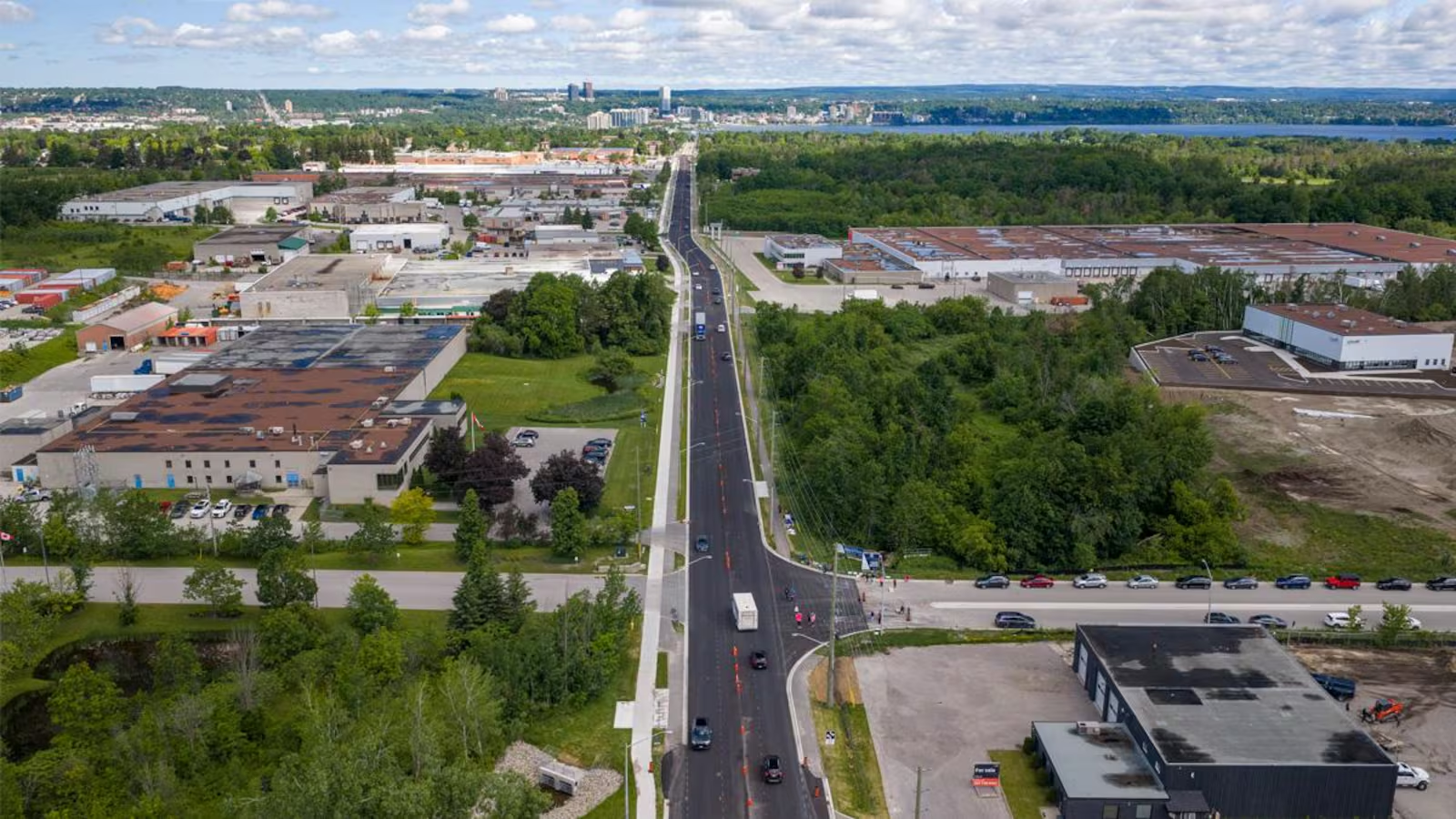
The Prime Minister’s comments follow a report from Nikkei Asia suggesting that Japanese automaker Honda may indefinitely suspend its plans to build a $15 billion electric vehicle (EV) manufacturing hub in Ontario. This project, which was initially expected to be operational by 2028, had already seen a two-year delay announced in May 2025. According to the report, Honda is shifting its North American strategy to prioritize hybrid vehicles as consumer demand for fully electric models slows across the continent.
Finance Minister François-Philippe Champagne, speaking to CTV’s Your Morning, noted that while he could not confirm Honda’s complete withdrawal, the global EV market is currently on “hold.” He attributed the shift in momentum largely to changing domestic policies and trade pressures from south of the border. This sentiment was echoed by Industry Minister Mélanie Joly’s office, which stated that American tariffs are creating “real pressures” for automakers, forcing many to scale back or delay multi-billion dollar battery and EV projects.
The potential loss of the Honda plant highlights the fragile nature of Canada’s trade relationship with the U.S. under the Canada-United States-Mexico Agreement (CUSMA). Japan’s Ambassador to Canada, Kanji Yamanouchi, had previously warned that Japanese investment is heavily dependent on seamless access to the American market. For now, Honda Canada has stated they have “nothing to report,” but the government remains under pressure to mitigate tariff impacts and protect Canada’s role in the future of automotive manufacturing.