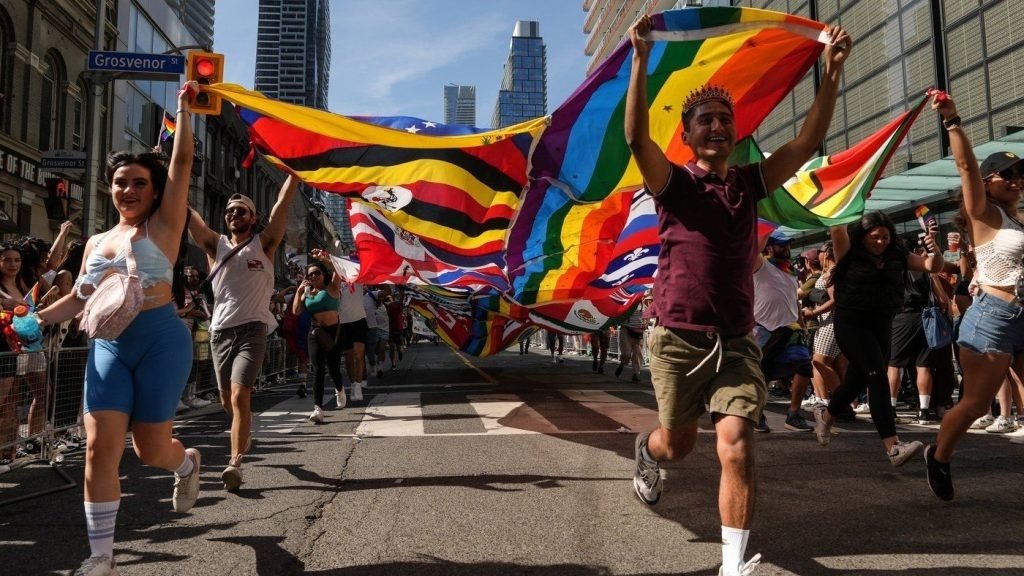
TORONTO — Despite navigating severe financial turbulence and a visible pullback from corporate backers, organizers of Pride Toronto have confirmed that this year’s historic celebrations will move forward unchanged. Gearing up for its milestone 45th anniversary under the defiant theme “We Won’t Stop,” the organization revealed it is confronting an immediate budget shortfall of $700,000 to $800,000, presenting serious hurdles for the long-term sustainability of the festival.
Kojo Modeste, the Executive Director of Pride Toronto, noted that while the majority of their corporate partners have returned, many were forced to significantly slash their financial contributions. Organizers attribute these cutbacks to broader economic pressures, shifting corporate diversity priorities, and newly introduced trade tariffs that have squeezed corporate marketing and philanthropy budgets across Canada.
The funding crisis is further exacerbated by a steep spike in operational and logistical costs, particularly around festival security. In response to an increase in public hostility and safety threats from extremist groups targeting the 2SLGBTQ+ community, safety costs have skyrocketed. To cope with the financial strain, Pride Toronto—alongside major festival organizers from Montreal and Vancouver—recently petitioned the Canadian federal government for an additional, multi-year $9 million cash injection to offset rising artist fees, insurance premiums, and infrastructure costs.
Beyond its cultural and social significance, the Pride festival serves as a massive economic engine for the country. Annual pride events in major hubs like Toronto, Montreal, and Vancouver collectively generate an estimated $1.3 billion in economic activity, with local businesses in Toronto’s Church-Wellesley Village pulling in over half of their annual revenue during the festival weekend alone.
While the sudden withdrawal of tech giants and major retailers like Google and Home Depot in recent cycles initially delivered a heavy blow to the festival’s bottom line, organizers remain entirely unfazed. Asserting that the festival’s grassroots spirit cannot be commercialized, leadership stated that the show will go on, ensuring a vibrant, safe, and fully accessible celebration when the streets close for the pedestrian takeover this June.