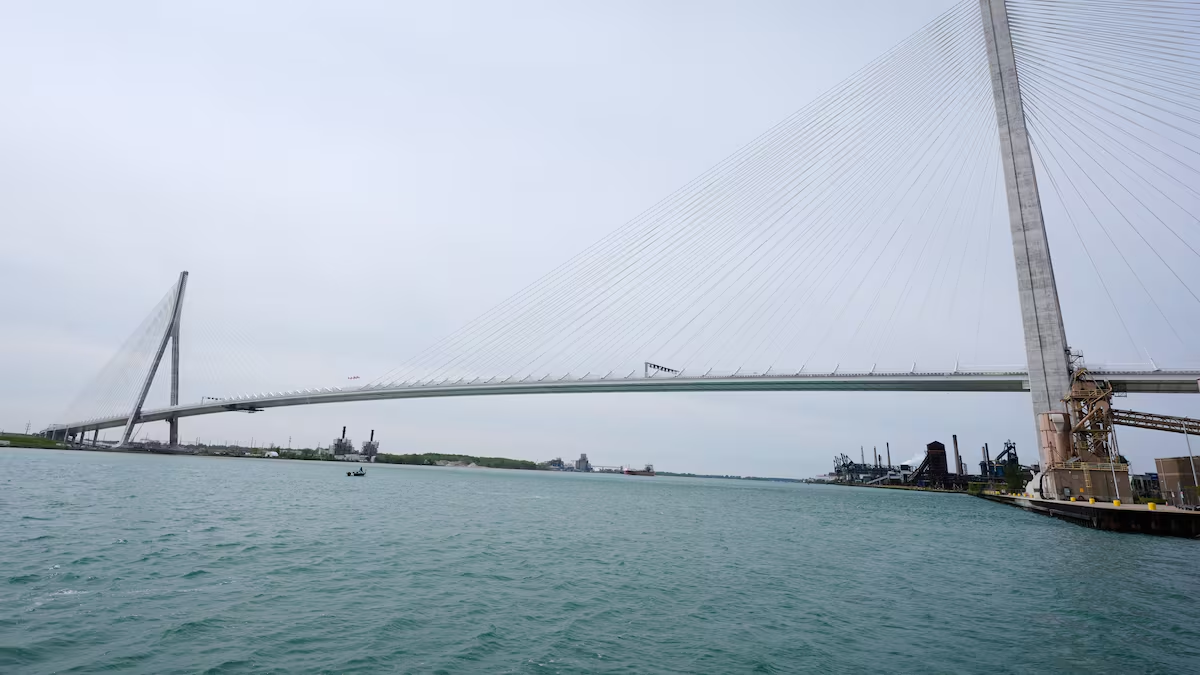
OTTAWA — The Gordie Howe International Bridge, a massive cable-stayed infrastructure project connecting Canada and the United States, will officially open to the public on July 27, 2026. Canada’s Department of Housing, Communities, and Infrastructure confirmed the inauguration date for the crossing, which links Windsor, Ontario, with Detroit, Michigan. While the new bridge is expected to significantly ease cross-border trade and traffic flow in the region, newly emerged details reveal that major amendments to the original agreement will result in a substantial loss of projected revenue for Canada.
Under the initial 2012 Canada-Michigan Crossing Agreement, Canada entirely funded the $6.4 billion USD construction cost of the bridge, which began in 2018 and has become one of the five longest bridges in North America. The original contract stipulated that Canada would receive 100 percent of the toll revenue until its multi-billion dollar investment was fully recovered—a financial recoupment estimated to take at least 50 years. Only after the total construction cost was cleared would the ongoing toll profits be split equally between the two nations.
However, bowing to intense diplomatic pressure from the United States, the contract was heavily modified, stripping Canada of its exclusive immediate returns. Under the newly revised agreement, Canada will now receive only 50 percent of the net toll profits during the first 15 years of operation. The remaining 50 percent will be diverted into a newly established Economic Development Fund, though it remains unclear which country will oversee or control this capital. Furthermore, Canada must now obtain prior U.S. approval if it wishes to raise toll rates by more than 10 percent or lower them below the local regional average.
The final stretch toward opening the bridge became highly contentious in February 2026, when Donald Trump publicly accused Canada of unfair trading practices. The subsequent delays were further complicated by high-level discussions between the U.S. Commerce Secretary and a prominent billionaire owner of the nearby competing Ambassador Bridge, who is also a close ally of Trump. Although Canadian Prime Minister Mark Carney hinted at an earlier opening this past June, strict U.S. pushback forced a postponement, eventually driving Canada to agree to the less favorable financial terms during tense diplomatic negotiations to ensure the vital economic link could finally open.