
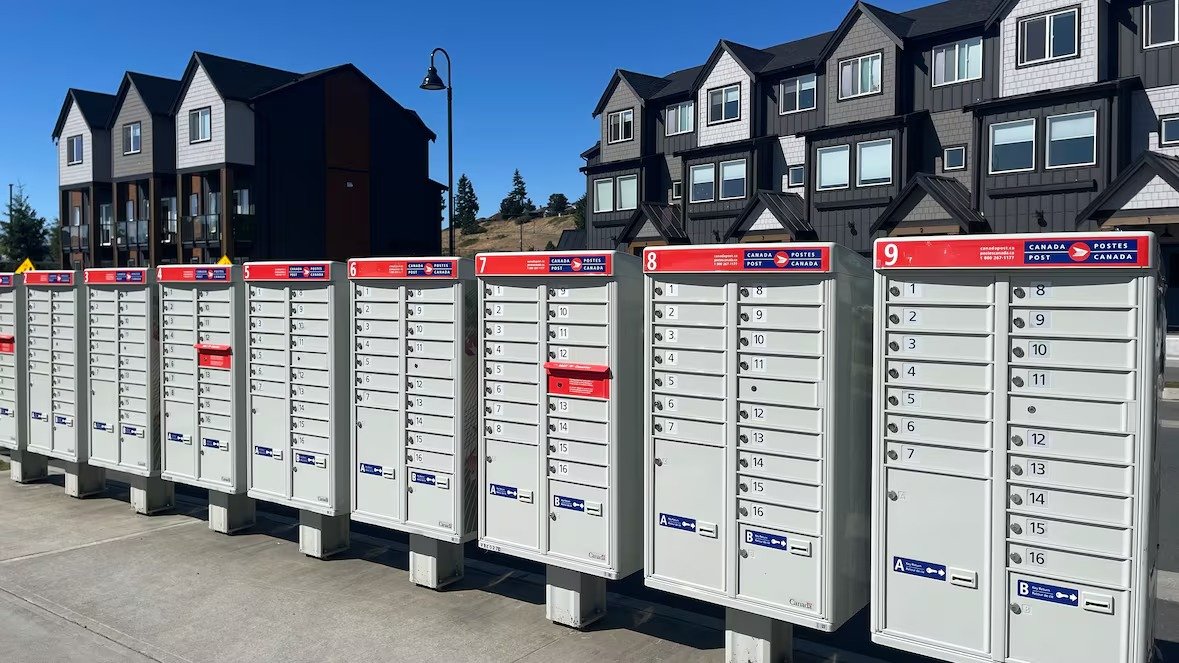
OTTAWA – Canada Post has announced the end of its traditional “door-to-door” mail delivery service as part of a significant nationwide restructuring plan. This move aims to address an “existential” financial crisis that has seen the Crown corporation lose over $3.8 billion since 2018. The transition will replace doorstep service with centralized community mailboxes for roughly four million households over the next five to nine years, marking one of the most substantial changes to the country’s postal system in decades.
The first phase of this rollout is scheduled to begin in late 2026 and carry into early 2027, affecting approximately 136,000 addresses across 13 communities. Key areas included in this initial wave span major urban centers such as Ottawa, Winnipeg, Etobicoke, and North and West Vancouver, as well as Sept-Îles, Quebec. By switching to a centralized system, Canada Post expects to slash its operational costs significantly, as delivering to a community mailbox costs roughly half as much as direct home delivery. The corporation projects that this change alone will save approximately $400 million annually.
Despite these potential savings, the plan has been met with stiff resistance from the Canadian Union of Postal Workers (CUPW) and various public interest groups. Critics argue that the move degrades a vital public service and disproportionately affects the elderly and those with mobility issues. In response, Canada Post has pledged to maintain its Delivery Accommodation Program, which provides tailored support—including weekly home delivery or modified mailbox compartments—for residents with verified functional limitations.
As the federal government under Prime Minister Mark Carney pushes for administrative efficiency, Minister of Government Transformation Joël Lightbound has described the situation at Canada Post as “not sustainable.” The new mandate also includes greater flexibility for the postal service to adjust delivery standards for non-urgent mail and modernize its retail network. While the transition may be a logistical necessity for the corporation’s survival, it remains a point of high tension among taxpayers and postal workers alike as the first community mailboxes are prepared for installation later this year.