
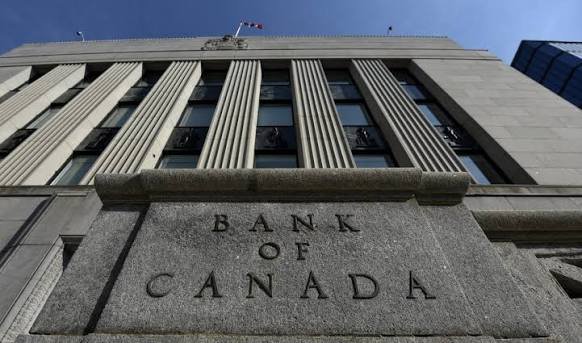
OTTAWA- The Bank of Canada has chosen to hold its benchmark policy rate unchanged at 2.25 per cent. Despite stagnant growth over the past 18 months, the central bank expects the Canadian economy to show gradual improvement in the coming months. However, this optimistic outlook comes with significant caveats, as the bank’s newly released monetary policy report warns that mounting global uncertainties—specifically surrounding U.S. tariffs and ongoing geopolitical conflict in the Middle East—could easily knock this projected growth off course.
According to the central bank’s report, Canada’s gross domestic product (GDP) remained virtually unchanged from the first quarter of 2025 to the first quarter of 2026, pointing to a growth rate close to zero. This stagnant performance was weaker than the 1.5 per cent growth rate the bank had projected back in April. Economists attribute last quarter’s sluggishness to several temporary drags, including a sudden dip in oil and gas investments, reduced domestic vehicle manufacturing, and an unexpected decline in government spending. Furthermore, the housing market remained depressed due to high interest rates, affordability barriers, and slower population growth.
Despite these setbacks, household spending has remained resilient, and a second-quarter rebound in exports and residential investment is expected to push growth just above one per cent for the first half of 2026. The biggest risks to the cost of living remain Canada’s trade negotiations with the United States and escalation of conflicts in the Middle East. While headline inflation has crept past three per cent, core inflation (excluding gasoline) remains anchored near the target rate of two per cent. With the breakdown of the U.S.–Iran ceasefire and slower commercial shipping in the Strait of Hormuz, global oil prices remain highly unpredictable. Meanwhile, a steady unemployment rate fluctuating between 6.5 and 7 per cent indicates that there is still excess supply within the domestic economy.