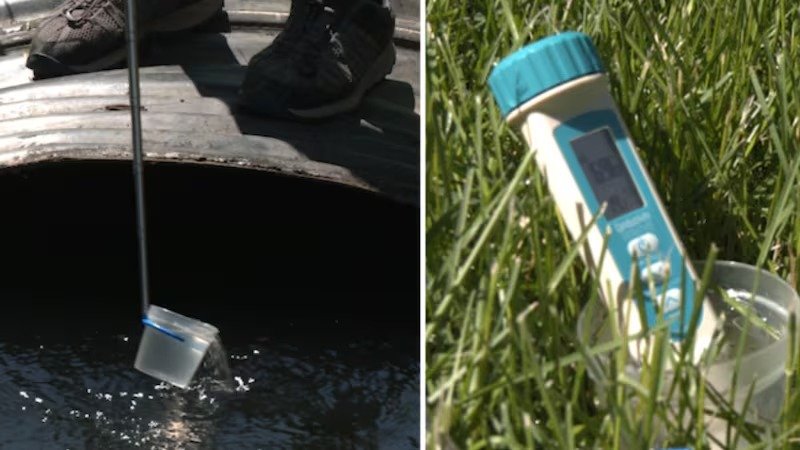
BARRIE: A study conducted by the environmental organization ‘Friends of Muskoka Watershed’ has revealed a significant and alarming increase in chloride levels across Muskoka’s lakes and waterways. The findings are based on water samples systematically collected every two weeks by volunteers from local lakes, culverts, and streams.
According to project lead Alesha Breckenridge, data now shows a sharp upward trend in chloride levels in 25 percent of the recreational lakes in Muskoka compared to previous years. The primary culprit behind this spike is the heavy use of road salt applied during winter months to melt ice.
However, environmentalists emphasize that municipal road management cannot be held solely responsible. Unregulated private property usage—such as over-salting private driveways, parking lots, and walkways—accounts for roughly 20 percent of the problem. While long-term data indicates that chloride levels have been climbing since the 1970s, the concentration dilutes in larger bodies of water. However, samples taken directly from areas near culverts and drainage channels show dangerously high levels.
Prominent scientist Dr. Neil Hutchinson noted that the Canadian federal government declared road salt a hazardous substance back in 2001. While initial safety guidelines based on hard water conditions deemed concentrations up to 120 ppm (parts per million) acceptable, Muskoka’s soft-water ecosystem is far more vulnerable. In soft water, a safe baseline is around 10 mg per litre, and anything exceeding 20 mg per litre becomes highly concerning for sensitive aquatic life.
Currently, chloride levels in Gravenhurst Bay have reached 18 mg per litre, with several other Muskoka lakes reporting even higher concentrations. To combat this, experts advise that a single 12-ounce cup of salt is sufficient for a standard one-car driveway, while just one tablespoon can cover a square section of a sidewalk.
Records show that the District of Muskoka spread approximately 5,000 tonnes of salt on roads last year alone. James Steele, Commissioner of Engineering and Public Works, stated that the municipality is actively adopting new technologies to ensure smarter application. Authorities are now utilizing Road Weather Information Systems (RWIS) to precisely monitor road conditions before deploying salt trucks. Armed with new funding, the environmental group is preparing to expand its testing initiative into the ‘Lake of Bays’ region. Residents interested in monitoring local water quality can also acquire testing kits through the ‘Water Rangers’ program.