
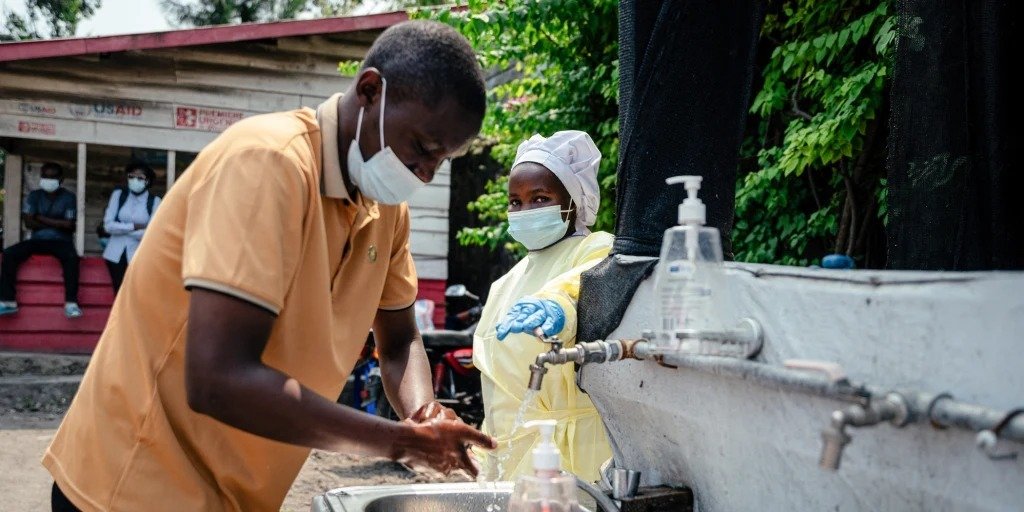
KINSHASA: The World Health Organization (WHO) has officially declared a Public Health Emergency of International Concern (PHEIC) following the rapid and deadly escalation of a rare Ebola outbreak in the Democratic Republic of the Congo (DRC). Public health officials have confirmed at least 131 deaths and 513 suspected cases, expressing grave concern over the “scale and speed” at which the highly contagious virus is tearing through the country’s eastern provinces.
The outbreak involves the Bundibugyo virus, a highly lethal and rare strain of Ebola for which there are currently no approved vaccines, specific therapeutic drugs, or licensed treatments.
Diagnostic Failures Delayed Vital Response
The crisis dramatically worsened due to critical failures in initial testing and surveillance. The earliest known casualty occurred on April 24 in the city of Bunia, the capital of Ituri province. However, local health teams initially tested the patient only for the Zaire ebolavirus—the most common and well-known strain of the pathogen.
When those initial tests returned negative, local authorities prematurely dropped their guard, misjudging the threat. It was only weeks later, after detailed laboratory analysis was conducted at the Institut National de Recherche Biomédicale (INRB) in the capital city of Kinshasa, that scientists identified the rare Bundibugyo strain.
Leading Congolese virologists have openly admitted that the nation’s early surveillance systems failed. The diagnostic delay allowed the virus to spread completely unchecked for weeks, quietly infiltrating densely populated gold-mining hubs and major urban areas, including Goma, Mongbwalu, Butembo, and Nyakunde.
Humanitarian Crisis Multiplies Transmission Risk
Ebola spreads aggressively through direct contact with infected bodily fluids, such as blood, vomit, or sweat. It manifests as a severe hemorrhagic fever, causing sudden onset of high fever, intense headaches, muscle pain, debilitating weakness, and in advanced stages, unexplained internal and external bleeding.
The epidemic has struck a region already crippled by decades of civil conflict and insecurity, creating a complex humanitarian disaster. Eastern Congo is currently home to hundreds of thousands of internally displaced refugees living in overcrowded camps with poor infrastructure, making standard infection control exceptionally difficult.
To mitigate risks, the United Nations has instructed non-essential staff in the region to work from home. Meanwhile, the WHO has issued a high-alert warning to neighboring East African nations sharing a border with the DRC—particularly Uganda, which has already reported its first cross-border fatality linked to the current outbreak. Global health teams and aid agencies are now rushing to construct emergency isolation facilities and scale up contact tracing to prevent a wider regional catastrophe.