
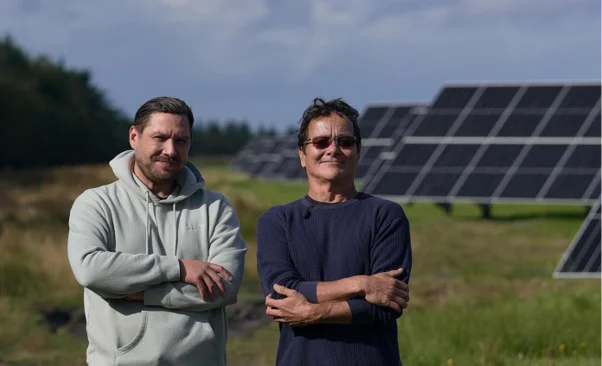
British Columbia: Canada’s Haida Gwaii archipelago, a global model for environmental conservation, is taking a major step to end its dependence on diesel for its energy needs. Under the leadership of the Indigenous-owned power company ‘Tll Yahda Energy’, work is underway to build Canada’s largest off-grid solar power installation.
Approximately 10 million litres of diesel were used annually to supply electricity to the island’s 4,500 residents and public services, including the hospital. The realization that transporting diesel by sea via barges and trucks poses severe environmental risks led the Haida Nation toward the goal of energy self-sufficiency in 2018. A nearby oil spill in 2016 had further heightened these concerns.
The project, named ‘Solar North’, is being implemented on cleared land surrounding the Masset airport in a manner that does not harm environmentally sensitive areas or salmon habitats. Currently, 4,250 solar panels have been installed at this two-megawatt facility. Through an expansion starting in 2027 and completing by the end of 2028, an additional 12,000 panels will be installed, raising the capacity to eight megawatts. With the completion of the two-megawatt ‘Solar South’ project at Sandspit airport by 2030, it will be possible to save 2.9 million litres of diesel annually. Since beginning operations in December 2025, Solar North has already saved approximately 168,000 litres of diesel.
Despite the region’s rainy and cloudy climate, island residents found solar energy to be the most suitable option compared to large-scale logging or expensive hydroelectric projects. This serves as a prime example of Indigenous communities becoming independent power producers in remote parts of Canada.
Meanwhile, BC Hydro’s temporary pause on accepting new applications for remote renewable energy projects poses a challenge for future wind and tidal energy initiatives. Although this measure is intended to focus on nine existing projects, there are concerns that it could affect the province’s goal of reducing diesel use by 80 percent by 2030. Nevertheless, Haida Gwaii residents remain hopeful that the government and BC Hydro will continue to collaborate with Indigenous communities moving forward.