EDMONTON: The Alberta Real Estate Association (AREA) has released its 2027 market forecast, predicting an increase in home sales and average prices across the province alongside a sharp decline in new housing starts. According to the report, total residential sales in Alberta are projected to reach approximately 69,200 units next year, marking a 2.4 percent increase compared to 2026.
Apartment sales are expected to lead the market with a 10.4 percent surge, while detached home sales are forecast to see a modest 0.9 percent uptick. The average price of a detached home in the province is projected to climb 2.4 percent—or 0.3 percent after inflation—from $616,000 to $631,000. In Edmonton, home sales are expected to rise 3.5 percent to 16,400 units, with average detached home prices increasing 2 percent to $577,000 alongside a 1.8 percent population growth rate. Conversely, housing starts across Alberta are forecast to fall 21.2 percent from roughly 48,200 this year to 38,000 in 2027, driven by slower population growth and an existing surge of new inventory entering the market.
Despite a projected rise in the Bank of Canada’s overnight rate from 2.5 percent to 3.5 percent, Alberta’s economy is forecast to grow by 2.4 percent, outpacing the national average of 2 percent. The provincial unemployment rate is also expected to dip from 6.7 percent to 6.2 percent, building on strong provincial investment that hit $76.1 billion in 2026—the highest level since 2014. AREA chief economist Ben Brunnen noted that while lower population growth, higher borrowing costs, and excess supply are temporarily tempering the Edmonton market, recent provincial amendments to municipal infill zoning bylaws will help curb oversupply and maintain price stability before the market strengthens further beyond 2027.
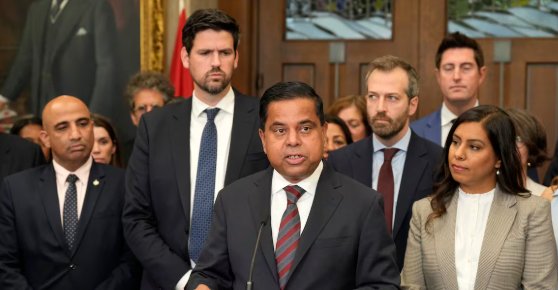
Speaking at an AREA event on Thursday, Alberta Premier Danielle Smith addressed several industry and regulatory concerns raised by attendees. Regarding $28 million in withheld federal housing funds earmarked for St. Albert, Smith explained that the province objects to Ottawa’s mandate requiring the exclusive use of net-zero concrete. She argued that because only one company manufactures the product, the requirement would create a monopoly and drive up home construction costs.
Premier Smith also responded to questions about Manitoba’s proposed ban on artificial intelligence-altered real estate listing photos, stating that while a similar ban is not under active consideration in Alberta, her government will explore ways to ensure consumer protection without being overly prescriptive. Additionally, addressing concerns over the scarcity of wheelchair-accessible homes, Smith suggested that rather than imposing costly blanket zoning changes on all new builds, the province could look into expanding its existing senior home-modification program—which funds ramps, chair lifts, and lowered fixtures—to support all residents facing mobility challenges.