
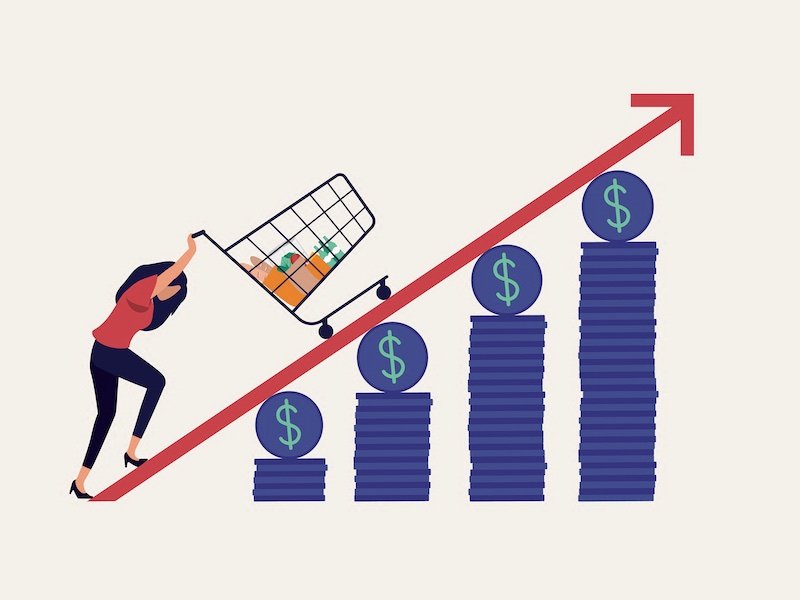
TORONTO: Financial experts have warned that Canada’s annual inflation rate is poised to jump past the 3% threshold in April, driven heavily by a severe spike in petrol and diesel prices. If realized, this will mark the first time the country’s inflation has breached this level since December 2023. The projections come just ahead of Statistics Canada’s scheduled release of the latest Consumer Price Index (CPI) data on Tuesday.
According to a Reuters poll conducted among leading economists, the headline inflation rate is expected to climb sharply to 3.1% in April, up from the 2.4% recorded in March. Economists at the Royal Bank of Canada (RBC) attribute much of this surge to the escalating cost of fuel, noting that average gasoline prices accelerated by another 8% in April, following a massive 21% annual surge in March.
The primary catalyst for the global energy crunch dates back to late February, when escalating conflicts in the Middle East led to Iran closing the strategic Strait of Hormuz. This critical disruption severely throttled global oil shipments and sent crude prices soaring at pumps worldwide.
Compounding the upward pressure on April’s figures is a year-over-year statistical shift. The federal government’s decision to abolish the consumer carbon price in April 2025 had successfully provided a cushion that kept inflation grounded over the past year. However, because that relief has now fully rolled out, it falls out of the annual price comparison this month, mathematically pushing the inflation numbers higher.
An updated outlook released by Desjardins confirms that headline inflation is on track to hit 3.1% in the second quarter of 2026. Experts note that while the federal government temporarily waived the federal fuel excise tax in mid-April to alleviate pain at the pumps, the measure will not be enough to fully offset the massive surge in energy costs.
Beyond fuel, consumers are likely to feel the pinch in other sectors. Grocery prices are projected to rise by roughly 0.6% this year as mounting transportation and fertilizer production costs trickle down to supermarket aisles. Additionally, supply chain disruptions and surging ocean freight rates tied to the Middle East crisis are expected to inflate the costs of imported retail goods, including apparel.
The Canadian economy is also navigating choppy waters on the international trade front, particularly due to ongoing tariff disputes with the United States. In response to these complex domestic and global uncertainties, the Bank of Canada has maintained its benchmark policy interest rate at 2.25%.
While the central bank has stated it intends to “look through” the immediate, temporary price hikes caused by the energy shock, it remains highly vigilant against these costs becoming deeply entrenched. Given the prevailing economic vulnerabilities, prominent financial analysts predict that the central bank will adopt a cautious “wait-and-see” approach, keeping interest rates steady at the current level through the end of 2026.