
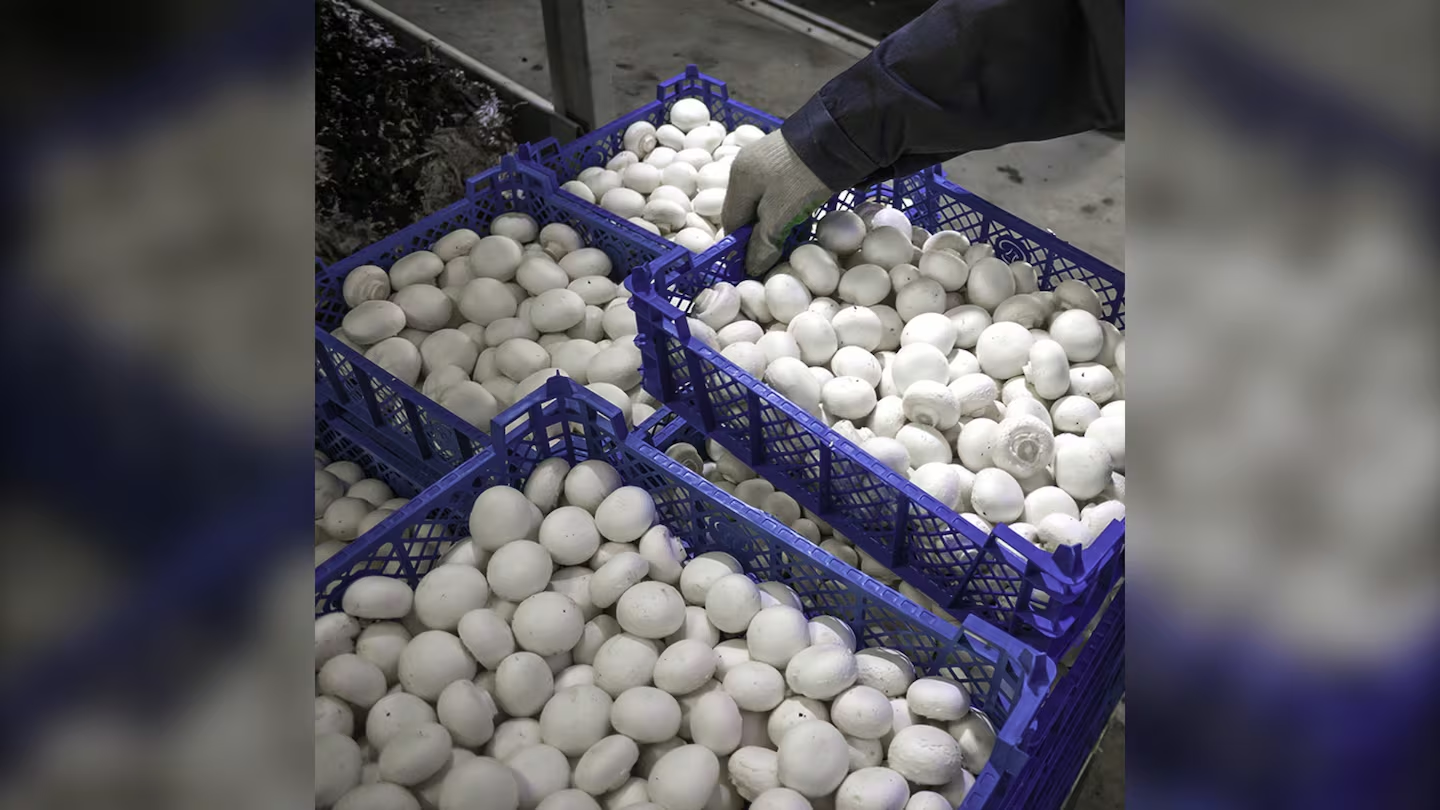
OTTAWA: Canadian mushroom growers are warning of potential market instability, production cuts, and job losses as new U.S. tariffs are set to take effect on Monday. The trade disruption arrives just as Canada, the United States, and Mexico approach a critical July 1 deadline to formally review the Canada-U.S.-Mexico Agreement (CUSMA). +1
A fact sheet recently released by the U.S. Department of Commerce revealed that fresh Canadian mushrooms will face countervailing duties of up to 5%. The U.S. government justified the penalties by claiming that Canadian growers benefit from unfair government subsidies—specifically targeting agricultural tax exemptions. Representatives for the Canadian industry have slammed the move, pointing out that general agricultural tax exemptions are normal practice and exist on both sides of the border. +1
The economic fallout is expected to reverberate across the entire Canadian market, affecting even those farms that sell exclusively to domestic buyers. Currently, approximately 40% of all mushrooms grown in Canada are exported to the United States. With the new 5% levy making exports cost-prohibitive, industry insiders warn that a massive surplus of mushrooms will remain within Canada, effectively flooding the domestic market and driving down revenue. +1
For large-scale, family-run operations like Carleton Mushroom Farms in Osgoode, Ontario, the threat is immediate. The high-tech, 4,300-square-foot facility produces an impressive 300,000 pounds of mushrooms per week. Farm owner Mike Medeiros expressed concern that a flooded domestic market would force him to scale back operations and downsize his workforce to keep payroll manageable. +1
International trade experts view the new duties as a strategic political signal from the Trump administration, highlighting the strong political influence wielded by the U.S. agricultural lobby. Trade lawyers note that this reflects a broader American trend of scrutinizing and penalizing cross-border agricultural imports wherever politically advantageous. While the Canadian Mushroom Growers’ Association has vowed to legally challenge the countervailing duties, a resolution through official trade channels will take time—leaving local farmers to absorb the initial financial shock.