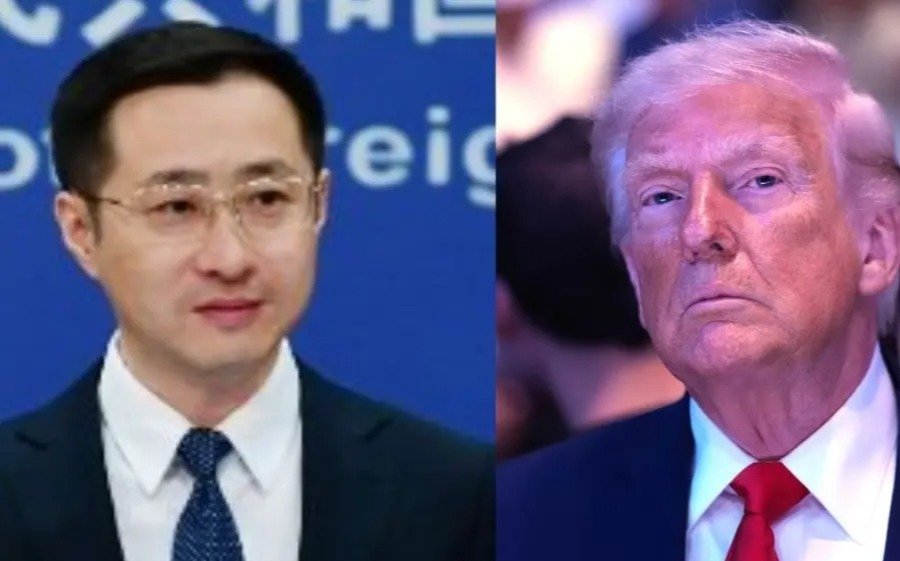
BEIJING – The Chinese Foreign Ministry has formally dismissed allegations that it is providing military assistance to Iran, calling the claims “groundless” and “purely fabricated.” During a press briefing on April 15, 2026, spokesperson Guo Jiakun emphasized that China remains committed to a responsible export policy and maintains a neutral stance in the ongoing Middle East conflict. The denial follows reports from U.S. intelligence suggesting that Beijing might be preparing to supply Tehran with advanced air defense systems, specifically man-portable air-defense systems (MANPADS), to bolster its defenses during a fragile ceasefire period.
The diplomatic tension has intensified following a Financial Times report claiming that the Islamic Revolutionary Guard Corps (IRGC) utilized a Chinese-built spy satellite, the TEE-01B, to monitor and target U.S. military bases. According to leaked documents, the satellite provided high-resolution imagery used to coordinate drone and missile strikes on strategic locations, including the Prince Sultan Air Base in Saudi Arabia. China has firmly rejected these findings, describing them as “ill-intentioned associations” and disinformation aimed at undermining its international standing.
In response to these developments, U.S. President Donald Trump has issued a stern economic warning, threatening to impose a 50% tariff on Chinese goods if it is proven that Beijing has provided weapons or military support to Iran. Speaking to the media, the President described the potential tariffs as “staggering” and aimed at ensuring no foreign power intervenes to support Tehran while the U.S. maintains a naval blockade of the Strait of Hormuz. Beijing, in turn, has vowed to implement “countermeasures” should Washington move forward with these unilateral economic sanctions.
Despite the escalating rhetoric, there are signs of continued diplomatic maneuvering. President Trump recently suggested that Chinese President Xi Jinping had personally denied the weapons transfers during private communications, and the two leaders are still scheduled to meet in Beijing next month. However, the deadlock remains high as China continues to criticize the U.S. blockade and unilateral sanctions, arguing that such actions are the primary obstacles to regional peace and a final agreement between Washington and Tehran.