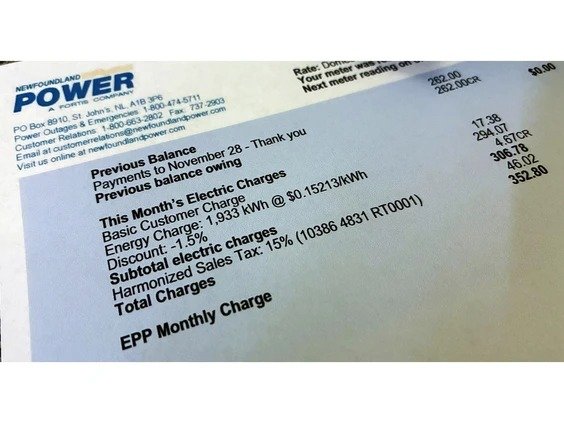
ST. JOHN’S: Families across Newfoundland and Labrador are facing a severe financial crisis as electricity bills skyrocket with the onset of winter. Most households have reported a two-to-three-fold increase in their monthly power costs, a spike attributed to a rate hike that took effect on July 1st combined with the increased heating demands of the season. For many residents already struggling with the cost of living, these soaring utility costs are creating an unmanageable burden.
The severity of the situation is highlighted by the experience of Wanda Dyke, a resident of Gander. She reported that the bill for her unused shed—which typically averages $22—suddenly surged to $207. Her primary residence saw a similar, inexplicable jump. Despite using wood stoves to supplement heating, Dyke expressed frustration that her efforts to conserve energy were not reflected in the charges. She noted that after contacting authorities, she failed to receive a clear explanation for the discrepancy. Similar grievances have been raised by residents like Alisha Blanchard in Corner Brook, indicating a widespread issue across the province.
Provincial Consumer Advocate Dennis Browne revealed that his office received over 80 complaints regarding billing discrepancies in November alone. Browne has pointed to the province’s reliance on outdated metering technology as a core part of the problem. He argued that if Newfoundland Power had implemented smart meters—which are common in most other Canadian provinces—customers could monitor their usage in real-time and identify spikes immediately. According to Browne, the current system leaves consumers in the dark until a massive bill arrives at the end of the month.
In response to the backlash, Newfoundland Power maintained that the primary driver for high bills is the plummeting winter temperature. The utility explained that heating accounts for roughly 75% of a typical home’s electricity consumption during the colder months. When temperatures drop, heating systems must work significantly harder and run longer to maintain indoor warmth, even if the thermostat remains at a constant setting. They emphasize that the seasonal shift is the most common reason for dramatic bill increases.
The Public Utilities Board (PUB) has officially intervened, launching an investigation into the 2024–2025 winter billing practices. The board will examine the accuracy of meter readings and the specific impact of weather-related usage spikes on consumer costs. To assist struggling families in the interim, authorities are encouraging customers to enroll in the ‘Equal Payment Plan,’ which averages yearly costs into predictable monthly installments to avoid the “sticker shock” of peak winter billing.