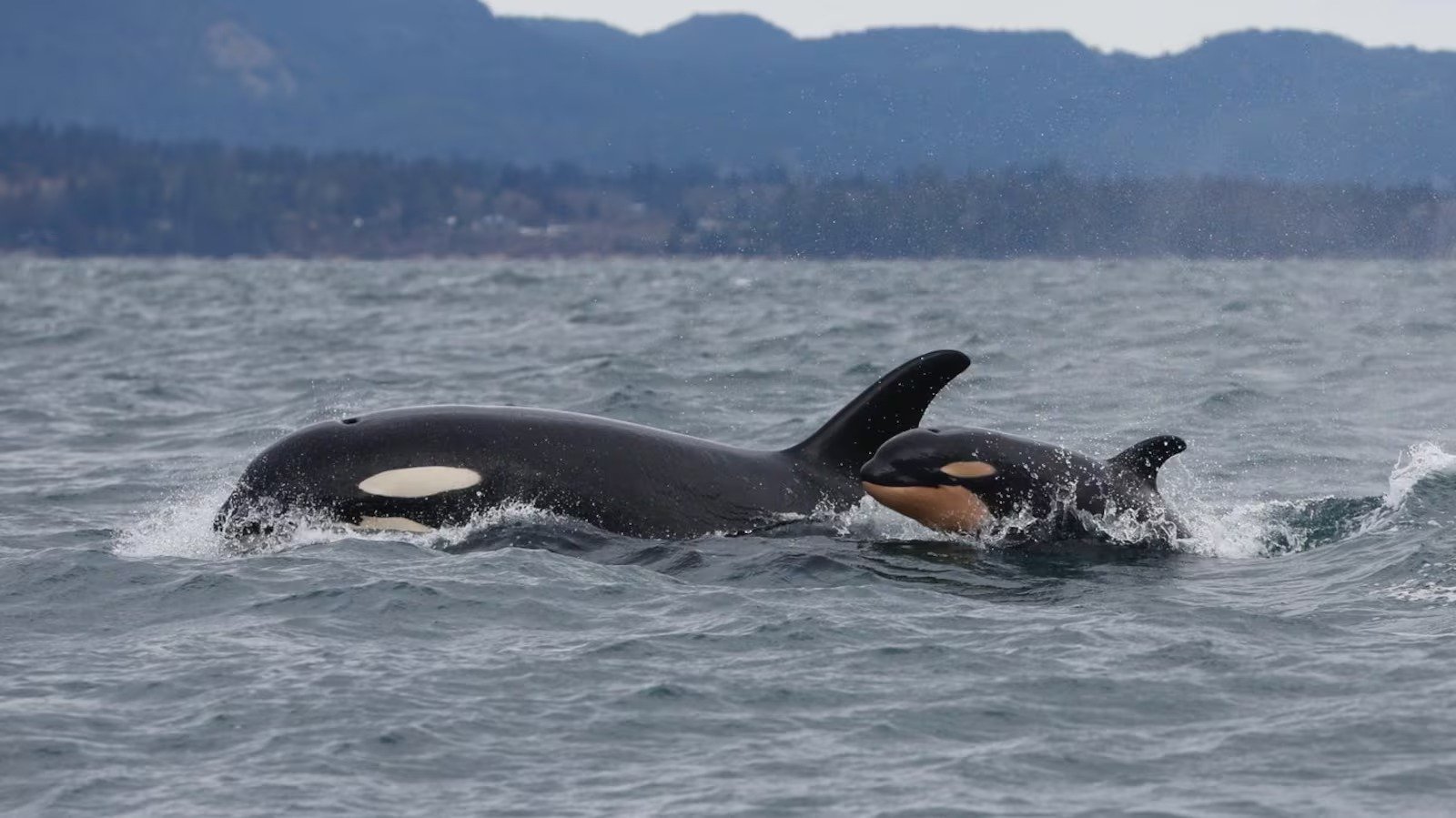
BRITISH COLUMBIA: A new survey report indicates that the Southern Resident Killer Whales, also known as Orcas, are under threat of extinction. The survey confirms that their population numbers have not significantly increased, and the species could slowly disappear if conservation measures are not aggressively reinforced. This warning was issued by Michael Weiss, Director of the Center for Whale Research.
Weiss pointed out that the primary causes for the decline in the Orca population include a decrease in Chinook salmon, marine pollution, and noise disturbance from cruise ships, tankers, and cargo vessels within the coastal habitat of Washington State and Southern British Columbia.
“We are not saying these orcas will face extinction in the next five years, but there is a good chance that at least one of the three existing pods could disappear in the next 50 years,” Weiss stated. As of July 1, the total number of orcas stands at 74, which is only one individual more than last year. Although four calves were born during the count period, only two survived. Southern Resident Orcas exhibit a high mortality rate, with approximately 50% of calves dying within their first year.
The condition of the group known as ‘K Pod’ is particularly critical. This pod currently has only 14 members, the lowest count in 50 years of survey history. The alarming concern is that these individuals are not reproducing. Furthermore, the oldest male in the K Pod (K26) disappeared in the late summer of 2024. Weiss added that the lack of genetic diversity is negatively affecting the orcas’ survival and immune system.
Currently, only the ‘J Pod’ is showing signs of growth. Only 15% (11 individuals) of the Southern Resident Orca population are calves under 10 years old. This contrasts sharply with the growing Northern Resident Orca groups, where calves make up 47% of the population.
Weiss believes that the orcas’ recovery is possible through the restoration of Chinook salmon habitats, especially freshwater spawning grounds, and through changes in fishing practices. “Their urbanized habitat is a problem. Trying to hunt in areas where ships pass daily is equivalent to trying to find food on a highway,” Weiss explained. He added that shifting salmon fishing from the open sea to estuaries would be beneficial for the orcas.