
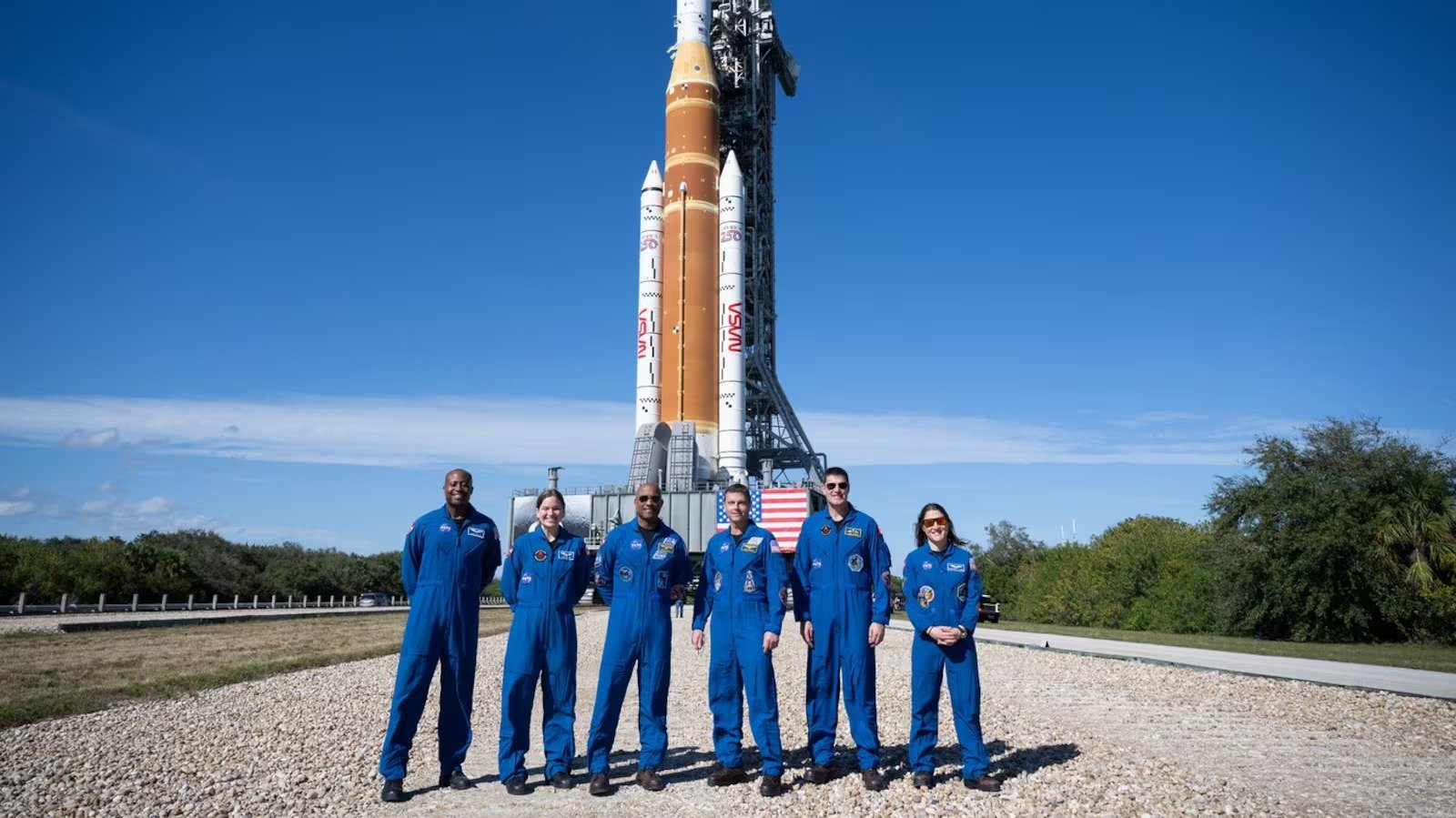
WASHINGTON D.C. — Canadian astronaut Jenni Gibbons is set to play a pivotal role in NASA’s historic Artemis II mission, marking a significant milestone in Canada’s space exploration history. As the primary backup for fellow Canadian astronaut Jeremy Hansen, Gibbons stands ready to join the four-person crew for humanity’s first journey to the Moon in over 50 years. The mission is currently targeted for launch on April 1, 2026, from the Kennedy Space Center in Florida.
The Role of a Backup Astronaut
While Hansen is scheduled to serve as the mission specialist, the assignment of Gibbons as the official backup ensures that Canada maintains its seat on the mission regardless of unforeseen circumstances. Her responsibilities extend far beyond being a substitute; she has undergone years of rigorous training alongside the primary crew, including simulated emergency scenarios and deep-space navigation exercises.
If the mission proceeds as planned with the primary crew, Gibbons will remain on Earth to perform the critical role of Lunar Capsule Communicator (Capcom). In this capacity, she will serve as the primary voice link between Mission Control in Houston and the Orion spacecraft as it journeys around the Moon.
Academic Excellence and Career Path
A native of Calgary, Alberta, Jenni Gibbons (formerly Sidey-Gibbons) brings an elite scientific background to the Canadian Space Agency (CSA). Her academic and professional highlights include:
- Education: Bachelor of Engineering in Mechanical Engineering from McGill University and a Ph.D. in Engineering from the University of Cambridge.
- Academic Career: Before joining the CSA, she was an assistant professor at Cambridge, specializing in combustion and flame physics.
- Selection: Recruited in 2017 at the age of 28, she became the youngest astronaut candidate ever selected by the CSA and only the third Canadian woman to join the ranks.
A Symbol of International Cooperation
The Artemis II mission is a collaborative effort between NASA and the CSA, designed to test the Space Launch System (SLS) rocket and the Orion spacecraft with a human crew. The 10-day flight will take the crew approximately 10,300 kilometers beyond the far side of the Moon, further than any human has traveled before.
Gibbons has emphasized that this mission is a testament to international partnership and a “stepping stone” for future lunar landings and eventual missions to Mars. Her involvement reinforces Canada’s position as a key player in the new era of lunar exploration.