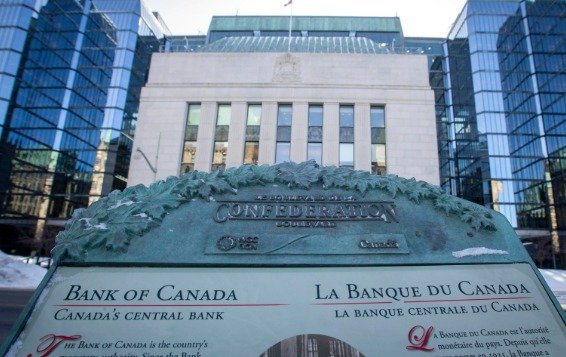
OTTAWA- Canadians could face tighter household budgets as economists predict the Bank of Canada will raise its key interest rate again next month to combat persistent inflation.
The forecast follows warnings on Tuesday from Bank of Canada Governor Tiff Macklem, who noted that cost pressures are steadily building on businesses. Speaking at the Economic Club of Canada, Macklem highlighted ongoing economic shocks, stating that despite recent dips in oil prices and refinery margins, inflation is expected to linger and could be compounded by a “second-round effect of the oil shock” in the new year.
Sal Guatieri, senior economist at BMO Capital Markets, said the governor’s remarks dashed hopes that the central bank might hold off on raising rates until early next year. According to Guatieri, the central bank remains deeply concerned about high energy costs spilling over into broader consumer prices. With the governor describing the economy as resilient, Guatieri anticipates at least a 0.25 percentage point hike at the bank’s final policy meeting of 2026 on December 9, which would bring the key interest rate to 2.75 per cent.
This comes after the Bank of Canada raised its policy rate by 0.25 percentage points to 2.5 per cent on October 28—its first rate hike in more than three years—in response to rising oil and gas prices driven by the Iran war and other geopolitical conflicts. Macklem emphasized on Tuesday that the central bank’s primary contribution to Canadians’ well-being is keeping inflation low, stable, and predictable, even as it balances inflation risks against potential job market pressures.
While CIBC Chief Economist Avery Shenfeld noted signs of economic weakening, he agreed that the central bank is likely to act sooner rather than later as businesses begin passing higher transportation and production costs on to consumers. However, Shenfeld suggested that December’s anticipated increase could be the final hike for a considerable period, provided energy prices continue to cool.
Despite the consensus on a December hike, Guatieri cautioned that further tightening carries significant risks. He warned that if the labour market softens, unemployment rises, and new U.S. tariffs take effect in January without a trade deal in place, the rate hike could prove premature—potentially forcing the Bank of Canada to reverse course and cut rates next year.