
OTTAWA: Canada has a major opportunity to emerge as one of the world’s leading natural gas exporters, according to a new report released on Thursday by prominent financial analytics firm S&P Global.
However, achieving this goal requires overcoming significant hurdles, including lengthy permitting processes and a shortage of new private-sector projects. The federal government aims to export more than 100 million tonnes of liquefied natural gas (LNG) annually, compared to the single facility currently operating with a capacity of 14 million tonnes per year. The report highlights that meeting this federal target could generate roughly $1 trillion in natural gas sector investments and support approximately 250,000 jobs annually through 2050.
Permitting Delays and High Costs Pose Key Challenges
S&P Global Vice Chairman Daniel Yergin stated that if Canada can resolve permitting delays and high construction costs, it can play a decisive role in the global LNG market. Expanding the sector would also help globalize the Canadian economy and reduce its heavy reliance on the United States.
While Western Canada possesses vast natural gas reserves, building pipelines to transport gas from Alberta and northeastern British Columbia to the West Coast remains complex and expensive. Compared to Texas, permitting processes in Canada take 27 months longer, and pipeline construction costs are 160 percent higher, the report notes. To address this, the federal government has introduced new legislation aimed at accelerating regulatory reviews.
Asian Markets and Lower Emissions Offer Strategic Advantages
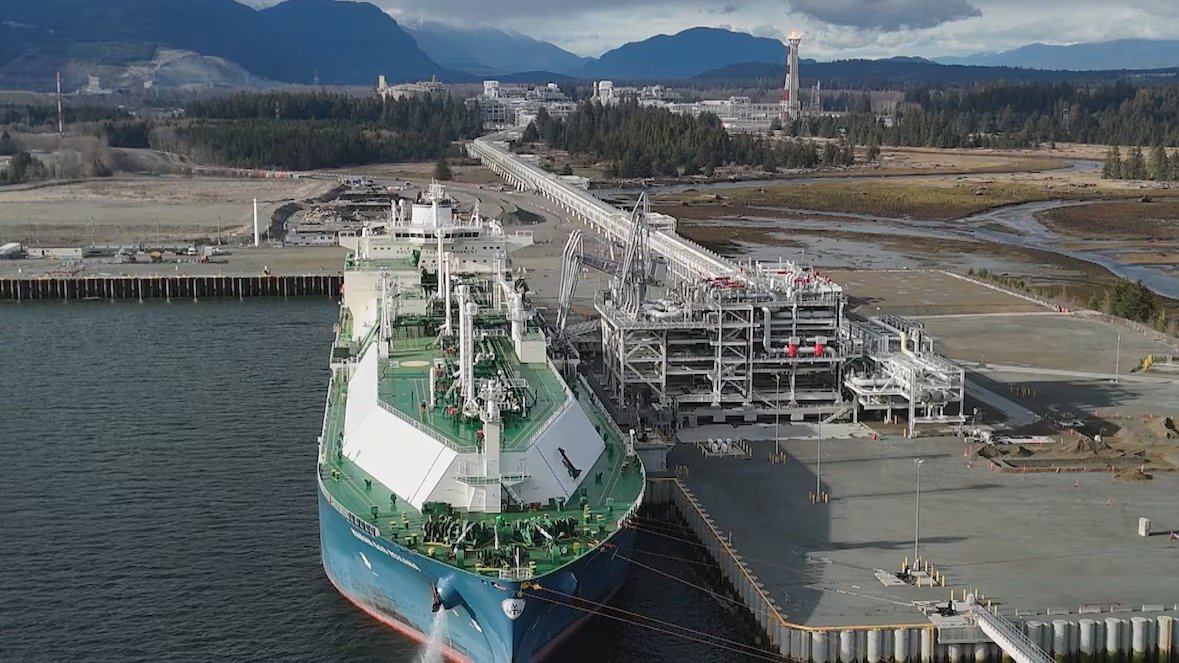
Although LNG Canada is currently the country’s sole operational export hub, six additional projects are either under construction or in development. Once completed, these facilities could collectively produce over 50 million tonnes of LNG per year.
Canada’s relatively short shipping distance to Asia gives it a major geographical advantage. Following conflicts in the Middle East earlier this year that disrupted global natural gas markets, Asian nations have shown strong interest in purchasing Canadian LNG. Meanwhile, European countries—anxious over rising gas prices ahead of winter—are also seeking to diversify their supply sources.
Over the coming decades, global natural gas demand is expected to surge due to population growth, artificial intelligence (AI) data centers, and increased air conditioning needs. The S&P Global report adds that Canadian LNG holds a competitive edge because its greenhouse gas emissions intensity is 55 percent lower than that of comparable projects in other countries.