
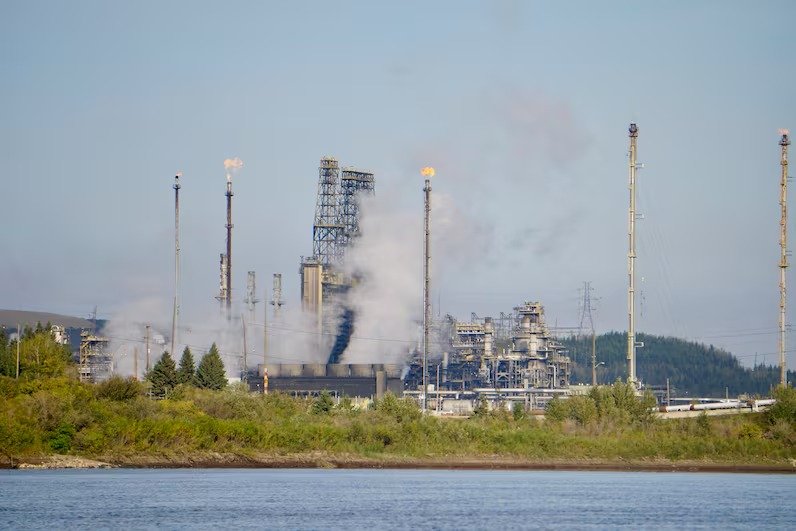
OTTAWA- Canada’s push to significantly scale up crude oil production in a bid to fuel economic growth is drawing intense criticism from environmentalists and Indigenous communities. Central to this controversy is Alberta’s oil sands region, where expanded infrastructure and pipeline capacity are enabling record-setting bitumen extraction. However, this industrial surge comes with a severe ecological cost, aggravating pre-existing pollution issues and escalating tensions over long-term environmental stewardship.
The primary environmental hazard stems from “tailings ponds”—enormous artificial reservoirs containing process-affected wastewater filled with sand, clay, naphthenic acids, heavy metals, and toxic hydrocarbons. Environmental groups estimate that over 1.4 trillion liters of this toxic tailings sludge are currently stored across Alberta. Beyond the ongoing problem of unlined ponds leaking hazardous chemicals into local groundwater, containment reservoirs are rapidly reaching capacity. In response, energy companies are lobbying regulatory authorities for permission to treat and discharge this industrial wastewater into the Athabasca River.
This proposed discharge has triggered widespread outcry and strong opposition from First Nations downstream. Indigenous leaders warn that even treated wastewater poses unacceptable risks to drinking water supplies, traditional aquatic food resources, and the overall health of the watershed. As oil production continues to rise, the clash between Canada’s economic growth ambitions and its environmental commitments remains a critical and deeply contentious issue.