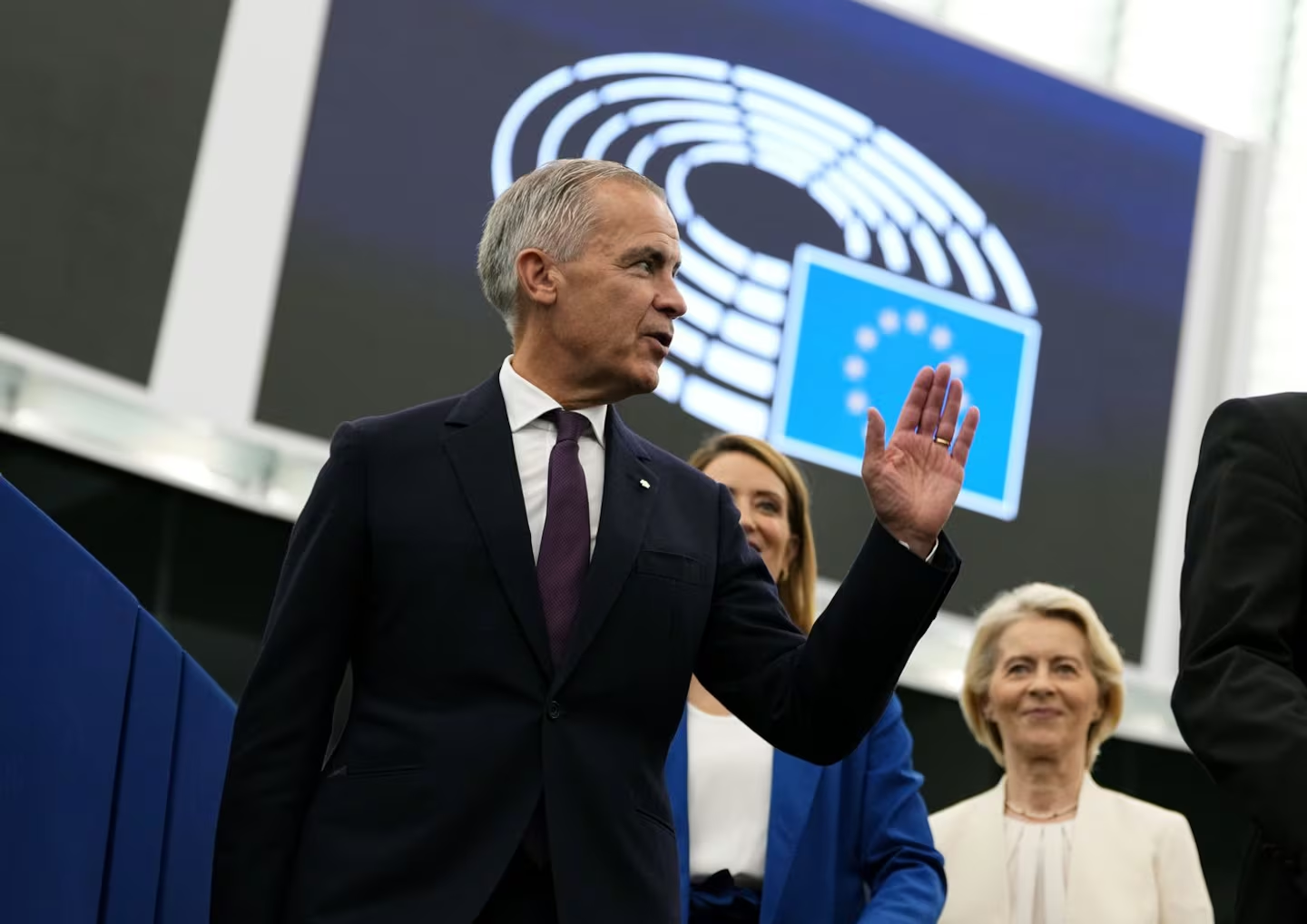
The European Commission has proposed establishing a new European Security Council, inviting Canada, Britain, and Ukraine to join as key partners. European Commission President Ursula von der Leyen outlined the proposal during a speech to the European Parliament in Strasbourg, France.
The initiative aims to counter emerging hybrid threats—particularly from Russia—and adapt to shifting U.S. foreign policy under President Donald Trump. Canadian Prime Minister Mark Carney attended the speech as Ottawa actively explores security and trade alternatives that lessen reliance on Washington.
European officials highlighted unconventional tactics by Russia, such as severing undersea communication cables and launching cross-border drone strikes (including a recent attack on Leipzig Airport in Germany). Von der Leyen stressed that a new mechanism is necessary to flank NATO’s collective defense by addressing threats that fall below the threshold of traditional military action.
Defense experts and diplomats have raised questions regarding the council’s structure and Canada’s exact role:
- Stephen Saideman (Professor, Carleton University): Noted that the proposal reflects Europe’s growing recognition of Canada in a world without a reliable U.S. ally, providing a framework for political coordination against strategic disruption from Russian President Vladimir Putin.
- Kerry Buck (Former Canadian Ambassador to NATO): Emphasized that the council would be most valuable if focused on non-military hybrid threats—such as cyberattacks and disinformation—rather than duplicating NATO’s existing military command structures.
EU Defence Commissioner Andrius Kubilius suggested the council could operate similarly to the UN Security Council, featuring permanent members (such as France, Germany, and Poland) alongside rotating partner nations. Details regarding the final framework are expected in an upcoming EU security strategy document.