CALGARY – Financial and automotive experts are urging Canadians planning to purchase a new vehicle to look beyond the initial sticker price and carefully account for surging fuel costs. Morgan Roberts, Vice President of RH Insurance, emphasized that owning a vehicle involves several recurring expenses—including insurance, maintenance, and parking fees—that must be balanced alongside the purchase price to determine true affordability.
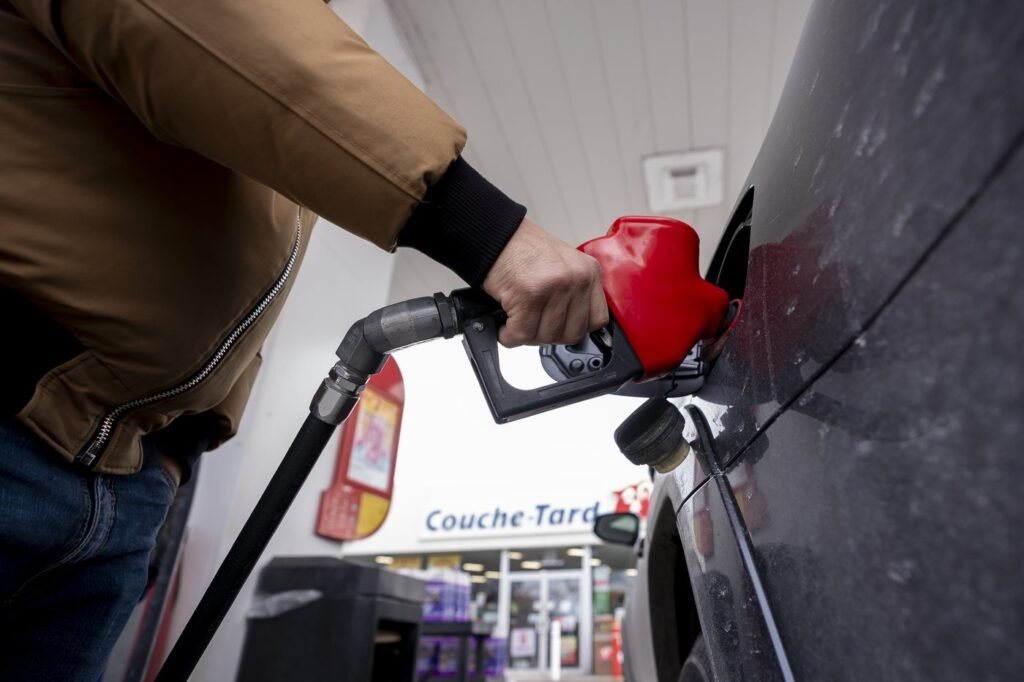
A recent analysis by Ratehub.ca reveals that Canadians are now spending an average of $231 per month on fuel alone. This represents a 40% increase compared to costs recorded before global tensions in the Middle East began impacting global oil markets. According to the data, the total monthly cost of owning and operating a car in Canada rose from $1,373 prior to the onset of recent conflicts in late February to approximately $1,439 today, driven primarily by the spike in gasoline prices.
The latest figures from Statistics Canada further underscore the financial strain, showing that the inflation rate climbed to 2.4% in March. This rise was heavily influenced by a staggering 21.2% year-over-year increase in gasoline prices, marking one of the highest jumps in recent history. Kristine D’Arbelles, a spokesperson for the Canadian Automobile Association (CAA), noted that fuel expenses now account for nearly one-third of the total cost of vehicle ownership, a shift that significantly impacts consumer purchasing power. For comparison, gasoline prices that averaged 131.4 cents per liter a year ago have now soared to approximately 169.1 cents per liter.
In an effort to provide some financial relief, the federal government has temporarily suspended the federal excise tax on fuel until Labor Day, a move expected to reduce costs by roughly 10 cents per liter. However, uncertainty remains regarding market stability once this tax holiday expires. Experts suggest that consumers looking for long-term relief should consider transitioning to hybrid or electric vehicles to mitigate the impact of volatile oil prices.
To manage immediate costs, the CAA recommends adopting more efficient driving habits, such as avoiding sudden acceleration and minimizing engine idling. The association points out that these small changes in behavior can reduce fuel consumption by up to 20%, offering both financial savings for the driver and environmental benefits for the community. As fuel prices continue to fluctuate, experts maintain that informed budgeting and efficient driving remain the best defenses for Canadian motorists.