
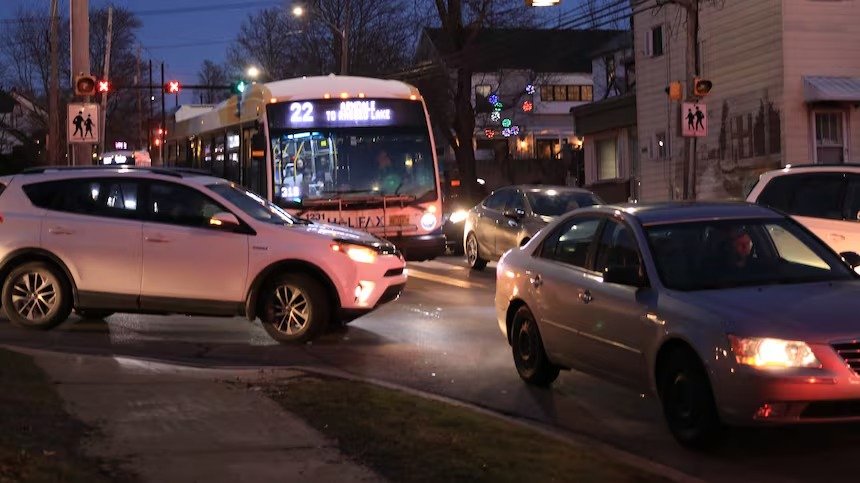
Halifax: The city’s struggle with traffic congestion shows no signs of improvement, according to a newly released report. The 2025 TomTom Traffic Index has ranked Halifax as the third most congested city in Canada, trailing only behind Vancouver and Toronto. This marks the second consecutive year the city has held this position, highlighting a deepening mobility crisis.
Data from the geolocation company reveals that Halifax drivers lost an average of 111 hours to rush-hour traffic over the past year—the equivalent of over four and a half days spent sitting in a vehicle. The report indicates that it now takes an average of 24 minutes to travel just 10 kilometers within the city center during peak times, a significant delay compared to free-flow conditions.
Causes of the Gridlock
Experts attribute the worsening situation to a combination of rapid population growth and a steady return to in-person office work. Furthermore, the city’s unique geography—with limited entry points to the peninsula—exacerbates the problem. Key corridors and bridges, such as the Macdonald and MacKay bridges, remain major bottlenecks for daily commuters.
The Call for Public Transit
The report also highlights a stark disparity in transportation choices. Currently, approximately 77% of residents rely on private vehicles for their commute, while only 6% utilize public transit. Transportation experts, including Professor Ahsan Habib from Dalhousie University, argue that strengthening public transit is the only viable solution.
Specific recommendations include:
- Implementing Bus Rapid Transit (BRT) systems.
- Expanding ferry services.
- Upgrading infrastructure with adaptive signal technology to improve vehicle flow.
In response to the “unprecedented congestion,” the provincial government and Halifax Regional Municipality (HRM) have recently issued requests for proposals to conduct a holistic review of the peninsula’s street network, seeking both short-term relief and long-term structural changes.